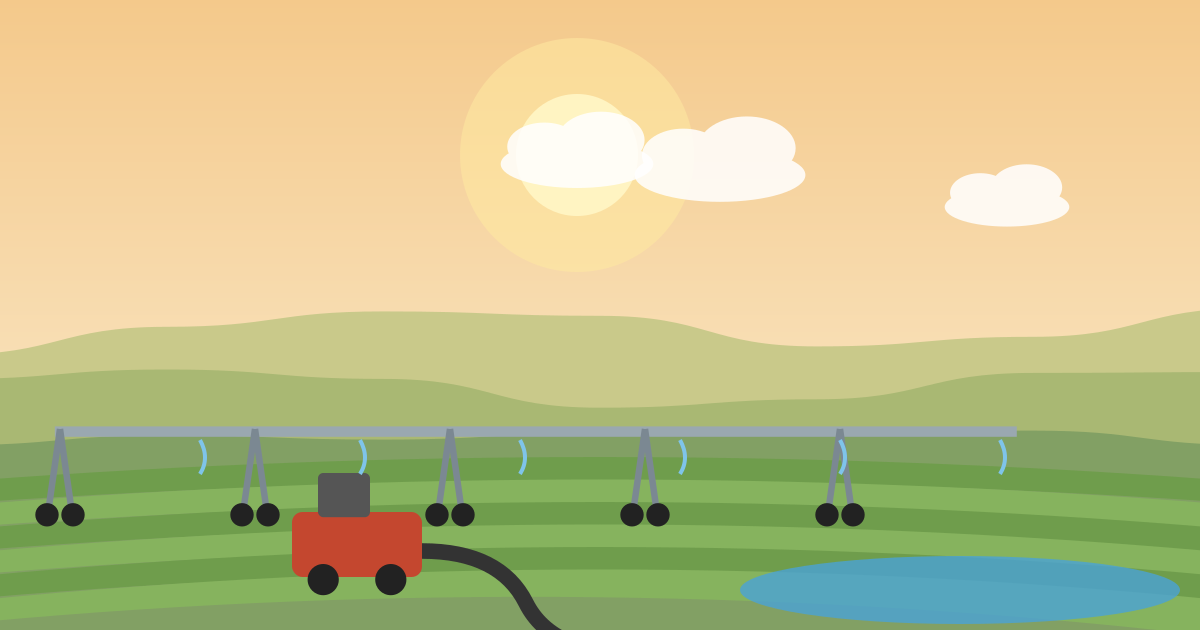
A traveling gun is a large rotating sprinkler mounted on a cart. A hose reel winds in the hose, slowly pulling the gun across a lane. It suits pastures, hay, grain and irregular fields where pivots do not fit. This guide covers what to ask, how to plan lanes and how to run it safely.
How a traveling gun works
A pump supplies high-pressure water through a long hose or pipe to the gun cart. The gun sprays a wide arc while the reel retracts the hose, moving the cart along the lane. When it reaches the end, it shuts off, and you move the rig to the next lane.
Compare with renting a hose reel irrigator and center pivot irrigation rentals.
Choosing a gun and reel
Ask the dealer for flow, pressure, throw distance, hose length and travel speed. Match to your field length and water source. Gun size decides the wetted diameter, which sets lane spacing. See irrigation pump rentals: types and sizing. See SARE publications, USDA NRCS and your state page.
Pressure and energy
Big guns need high pressure, often much higher than other sprinklers. That means more fuel or power. Compare costs with other methods. Check that pumps, pipes and fittings are rated for the pressure.
Lane layout
Space lanes so that spray patterns overlap. Spacing depends on wetted diameter, often 60 to 70 percent of it, less in wind. Mark lanes with flags. Clear rocks, fences and trees from the path. Plan where to park the cart and reel between sets.
Wind and uniformity
Wind can distort patterns and lower uniformity. Run in calm hours, use a lower trajectory nozzle when windy, and shorten spacing. Watch for overspray onto roads, buildings and neighbors. Check that the gun's sector angle covers only the field.
Hose and travel speed
Hose should lay straight without kinks. Travel speed sets the application depth, so slower speeds put on more water. Check speed with a stopwatch and a marked distance. Keep the hose clean and dry when stored.
Common mistakes to avoid
- Lane spacing too wide.
- Pressure too low.
- Running in high wind.
- Letting the hose kink.
- Parking near power lines.
Inspect before you accept
Check the gun, nozzle, reel, hose, cart, wheels and fittings. Test run. Photograph existing damage. See understanding rental equipment condition reports.
Safety
- Keep the rig and pipe away from power lines.
- Relieve pressure before service. See the farm machinery lockout-tagout procedure template.
- Stay clear of the gun while it is running, because the stream can injure.
- Keep children and animals away.
- Watch the reel for pinch points.
See the OSHA agricultural operations page and CDC NIOSH agriculture.
Transport
Reels are heavy and need proper towing. See the equipment transport tie-down checklist and DOT requirements for rented equipment transport.
Costs and terms
Ask about daily, weekly and seasonal rates, delivery, deposit and damage terms. See how to budget for farm equipment rentals and understanding rental agreements.
Planning the season
Map lanes, mark them and order them. Test the rig with water before the crop needs it. Estimate how long each pass takes and plan the moves. Keep spare nozzles, gaskets and tools. Use soil probes to judge when to irrigate. See renting a soil moisture probe for scheduling.
Troubleshooting
If the cart stalls, check hose drag, pressure and the drive. If the gun does not rotate, clean the drive arm and bearing. If coverage is uneven, check nozzle, pressure and spacing. If the hose leaks, inspect couplings. Contact the dealer when unsure.
Soil and slope
Heavy application on slopes and clay soils can cause runoff and ponding. Reduce application depth by speeding up travel or using a smaller nozzle. Sandy soils take more water but lose it quickly, so plan lighter, more frequent passes.
Cleaning and return
Drain the hose, flush the gun and dry components. See returning farm equipment: cleaning and fuel rules.
A sample season
A dairy rents a traveling gun to irrigate hay between grain fields. The crew marks lanes, runs at night when winds drop and logs each pass. The rig is flushed and returned.
Questions to ask the dealer
- What flow, pressure and throw?
- What hose length and lane spacing?
- What pump is needed?
- What are cleaning requirements?
- What damage terms apply?
Insurance and liability
Ask whether your policy covers rented irrigation gear and damage from overspray or road hazards. Keep inspection photos and agreements together.
Neighbors and roads
Overspray can hit roads and neighbors. Keep spray away from traffic, and talk to neighbors in advance. Keep lanes clear of obstacles that could damage the cart.
Keeping records
Record dates, lanes, pressure, travel speed and repairs. See record keeping for farm equipment rentals.
Matching the gun to crops
Large droplets can damage seedlings, soften seedbeds and cause crusting on some soils. Hay and established pasture tolerate guns well, while young vegetables and small seedlings may need a gentler system. Ask the dealer about nozzle options that produce smaller drops, and keep application depth within what the soil can take.
Energy and operating cost
High pressure means significant fuel or electricity. Estimate the cost per acre-inch by dividing hourly energy cost by the acre-inches applied each hour. Compare with other methods, and check whether lowering pressure with a different nozzle can save money while keeping coverage.
Moving between lanes
Plan a safe route for towing the reel, and mark overhead lines. Drain the hose before moving to reduce weight. Take your time at gates and ditches. Check tires, hitch and safety chains at each move.
Backup plans
Keep a spare nozzle, gasket set and hose clamps on site. Know where the nearest dealer or repair shop is, and keep their number on your phone. If a lane is missed because of a breakdown, plan to make it up before the crop is stressed.
Bottom line
Traveling guns suit irregular fields when pump, pressure and lane spacing match. Plan lanes, watch the wind and keep clear of power lines.
Frequently asked questions
How far does a traveling gun throw?
It depends on the gun and pressure. Ask the dealer.
Is wind a problem?
Yes. Use lower angles or run in calm hours.
What pressure is needed?
Often high. Check the specification.
Can it irrigate irregular fields?
Yes, within lane and hose limits.