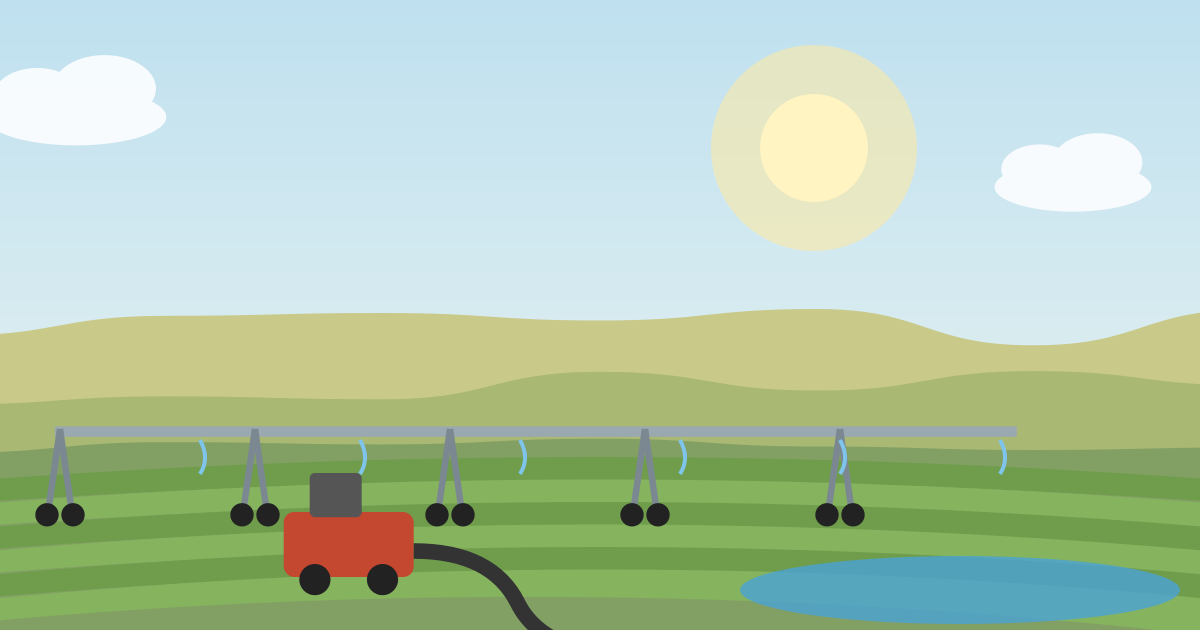
Sprinklers turn limited water into forage when rain falls short. Pasture systems range from light hand-moved aluminum pipe to wheel lines that roll across a field. Rentals are mostly seasonal and often include a pump or mainline. This guide covers choices, layout and the labor that comes with each.
Types of pasture sprinkler systems
- Hand-line. Short aluminum pipes with sprinklers, moved by hand.
- Wheel-line. A long pipe on wheels that rolls to the next set.
- Solid set. Pipes laid out for the season.
- Big gun or traveling gun. One large sprinkler. See renting a traveling gun irrigation.
- Pivot or linear. See center pivot irrigation rentals.
Small acreage often suits hand-lines. Larger fields favor wheel lines or guns.
Sizing the system
Estimate acres, crop water needs and the hours you can run each set. Match system flow to your pump and source. Ask the dealer for a layout and pressure plan. See irrigation pump rentals: types and sizing. See SARE publications, USDA NRCS and your state page.
Spacing and nozzles
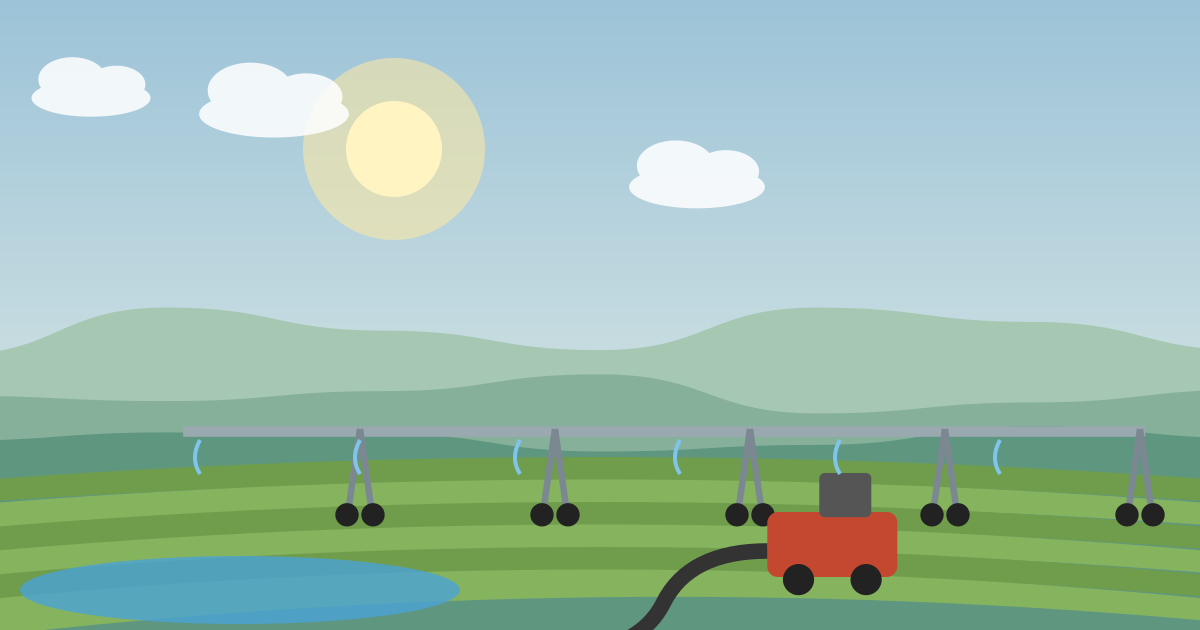
Sprinklers need overlap to give even coverage. Spacing, nozzle size and pressure should follow the manufacturer's chart. Wind distorts patterns, so reduce spacing or irrigate in calm hours. Check nozzles for wear and plugs. Use pressure gauges at the line end.
Mainlines and fittings
A mainline carries water to the laterals. Use quick couplers, risers and valves matched to line size. Keep gaskets in good shape. Anchor lines where animals can bump them. Bury or protect lines at crossings.
Pump and power
Choose a pump that delivers the required flow and pressure. Options include PTO, diesel and electric. See renting a PTO irrigation pump and renting a diesel irrigation pump. Add filters and screens to protect nozzles.
Labor and moves
Hand-lines and wheel lines need moves each set, often twice a day. Plan who does them and when. Moving pipe wet is heavy and messy. Draining before moves helps. Hire help if you cannot cover the schedule.
Livestock and sprinklers
Animals chew hoses, kick risers and rub on sprinklers. Fence off lines or move livestock off during irrigation. Remove animals while wet pastures recover. Be careful with electric fences near water. See community equipment libraries for shared options.
Common mistakes to avoid
- Too little overlap.
- Wrong pressure.
- Ignoring wind.
- Skipping mainline checks.
- Underestimating labor.
Inspect before you accept
Count pipes, sprinklers, couplers, risers and caps. Check gaskets, nozzles and wheels. Photograph existing damage. See understanding rental equipment condition reports.
Safety
- Keep pipes away from power lines when moving. This is the leading danger with aluminum pipe.
- Lock out pumps before service. See the farm machinery lockout-tagout procedure template.
- Relieve pressure before opening lines.
- Watch for slippery ground.
- Keep children away from pumps and lines.
See the OSHA agricultural operations page and CDC NIOSH agriculture.
Transport
Pipes are long and awkward. Load and secure properly. See the equipment transport tie-down checklist and DOT requirements for rented equipment transport.
Costs and terms
Ask about weekly and seasonal rates, delivery, damage rules and deposit. See how to budget for farm equipment rentals and understanding rental agreements.
Planning the season
Test the system early. Map set positions and number each so helpers know the order. Match application to forage growth and soil. Use soil probes to avoid overwatering. See renting a soil moisture probe for scheduling. Keep spare gaskets, nozzles and fittings.
Troubleshooting
If pressure is low, check leaks, pump speed and screens. If coverage is uneven, check spacing and nozzles. If sprinklers stick, clean and lubricate. If pipes leak at joints, replace gaskets. Contact the dealer when unsure.
Weather and soil
Wind drifts spray, and heat evaporates it. Water at night or early morning when possible. Heavy clay soils take water slowly and may run off, while sandy soils drain fast. Adjust set times to soil and slope. Avoid watering when pasture is wet from rain.
Cleaning and return
Drain pipes, flush and dry. Remove mud and plant debris. See returning farm equipment: cleaning and fuel rules.
A sample season
A grazing operation rents a wheel line for a summer hay pasture. The crew maps sets, moves the line each morning and evening, and checks pressure at the end of each move. After the season, the crew drains and returns it.
Questions to ask the dealer
- What pipe length and sprinkler spacing?
- What flow and pressure are needed?
- What is included, such as mainline and pump?
- What damage terms apply?
- Can the dealer help with layout?
Insurance and liability
Ask your insurer whether rented pipe and pumps are covered. Contact with power lines is a serious risk. Keep the rental agreement and inspection photos on file, and follow all dealer instructions on moving pipe near electric lines.
Winterizing
If you keep the system through fall, drain every line, store pipes under cover and protect pumps from freezing. Mark pipe positions before snow so you do not damage them with equipment. Record what you learned for next year.
Keeping records
Record dates, sets, hours, pressure and repairs. See record keeping for farm equipment rentals.
Comparing costs with other options
Add pump fuel or power, labor for moves, replacement gaskets and water fees to the rental price. Compare that total with custom irrigation or a different method before you commit. For a short lease or a trial year, rented pipe lets you test whether irrigation pays on your ground without buying a system.
Forage response and grazing timing
Water forage when it needs it, not on a calendar. Irrigated grass regrows fast, so plan grazing rotations around application days. Keep animals off soaked ground to prevent pugging, and give pastures time to recover before regrazing.
Bottom line
Pasture sprinklers extend the grazing season when set up well. Size the system, plan labor and protect it from livestock and wind.
Frequently asked questions
Hand-line or wheel-line?
Hand-lines suit small acres. Wheel lines save labor on larger fields.
How often must I move pipe?
Often twice a day, depending on the set time.
Can livestock stay in during irrigation?
Usually move them, because they can damage lines and wet pasture.
What is the biggest hazard?
Moving aluminum pipe near power lines.