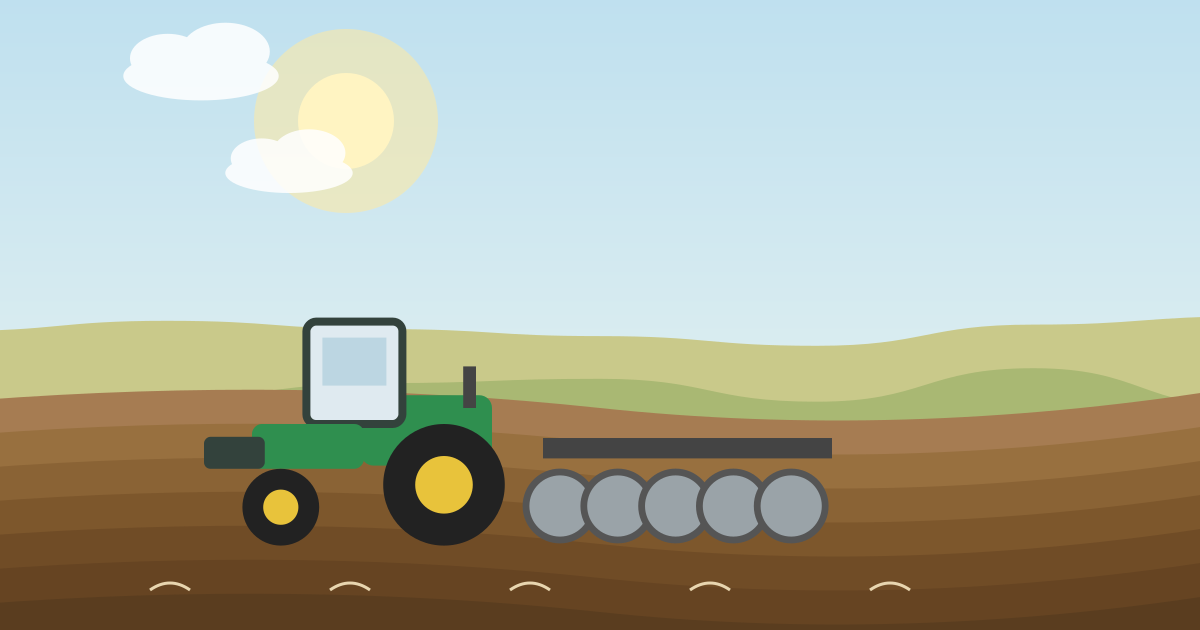
Low spots drown crops, high spots dry out and uneven fields waste water, seed and fertilizer. Leveling brings a field closer to a planned grade. It can be a minor touch-up with a box scraper or a major job with lasers and scrapers. Most farms rent the equipment, because the job is occasional. This guide covers equipment choices, planning and the pitfalls.
What leveling does
Leveling cuts soil from high areas and fills low areas to create a smooth, planned surface. Goals include:
- Draining ponded spots. Moving water off crops and into outlets.
- Even irrigation. Uniform advance of water in flood and furrow systems.
- Smoother operation. Less bouncing for planters and combines.
- Better crop uniformity.
- Reduced erosion when done on a planned grade.
For irrigation systems, see laser leveling rentals for irrigation prep.
Equipment options
- Box scrapers. A box with a scarifier and blade that cuts and spreads soil. Good for small jobs, driveways and farm roads.
- Land planes (leveling drags). Long frames that average out high and low spots as they travel. Common for gentle smoothing.
- Grader blades. Rear-mounted blades that can angle and tilt.
- Pull-type scrapers. Carry soil from cuts to fills over distance.
- Dozers and skid steers with blades. Used for rougher work and edges. See renting a skid-steer with grapple for manure for skid steer basics, and bulldozer rentals for farm land clearing for heavier work.
- Laser or GPS-guided systems. Control blade height with automatic hydraulics for precise grades.
Match the tool to your area and tolerance. A box scraper may suit a pasture lane, while a precision-graded irrigated field may need a laser.

Plan before you push dirt
- Survey the field. Use a transit, laser level or GPS to map elevations. Many extension and NRCS offices can advise; see the USDA NRCS and your state page.
- Decide the target grade. Consider drainage direction and outlets.
- Estimate cuts and fills. Balance volume so you do not need to import or export soil.
- Protect topsoil. Strip and stockpile it, then replace it after cuts and fills. Leaving subsoil exposed in cuts hurts yields.
- Check rules. Wetlands, drainage laws and conservation compliance may limit what you can do. Check with local conservation and farm service offices, and see the Farmers.gov service center locator.
- Locate tile and utilities.
Soil moisture
Work when soil is firm. Wet soil smears and compacts under heavy equipment, while very dry soil can turn to dust and resist cutting. Avoid leveling right before heavy rain. See how weather affects rental bookings and fees.
Running the equipment
- Make a test pass and check results with a laser level or stakes.
- Work in multiple directions, often cross-passing to smooth.
- Keep blade angles consistent.
- Move soil short distances where possible.
- Avoid overloading blades and scrapers.
- Finish with a light pass to smooth the surface.
Slow, steady work gives better results than rushing.
Tractor and power
Land planes and scrapers need substantial tractor power and weight. Check recommended horsepower, hitch type and hydraulics. See row crop tractor rentals, four-wheel-drive tractor rentals for heavy work and the tractor ballast weighting guide.
Common mistakes to avoid
- No survey. Eyeballing grades leaves surprises.
- Burying topsoil. Cuts expose poor subsoil that yields badly.
- Working wet. Compaction follows.
- Ignoring drainage outlets. Water has to go somewhere.
- Skipping permits. Fines can erase the benefit.
Inspect before you accept
Check blades, cutting edges, hydraulic hoses and cylinders, frame welds, wheels, hitch pins and control systems. If it has a laser or GPS, test it on a flat area. Photograph existing damage. See understanding rental equipment condition reports.
Safety
- Keep bystanders well away from moving soil and blades.
- Never go under a raised implement without supports.
- Be careful on slopes. Use seatbelts and rollover protection. See the tractor rollover prevention checklist.
- Use transport locks and lights.
- Shut down before servicing. See the farm machinery lockout-tagout procedure template.
See the OSHA agricultural operations page.
Costs and terms
Ask about daily and weekly rates, technology fees for lasers or GPS, delivery, wear charges and operator training. Compare with custom leveling contractors who bring equipment and experience. See how to budget for farm equipment rentals and the rental vs custom hire calculator.
A sample project
A farmer with a twenty-acre field has ponding in the corner after every rain. A survey shows a four-inch low spot. The plan: strip topsoil, cut from a nearby rise, fill the low spot, replace topsoil and finish with a land plane. The farmer rents a scraper and plane for a week, checks results with a laser level after each pass, and puts down a cover crop to protect the new surface. Ponding disappears the next season.
Questions to ask the dealer
- What tractor size does this land plane or scraper need?
- Is laser or GPS control available, and is setup help included?
- What are the cutting-edge wear charges?
- How wide is it, and can it travel public roads without a permit?
- What is the policy if rain halts the job midweek?
Leveling for pasture and farm lanes
Not every job needs a laser. Farm lanes, gateways and pasture hollows can be smoothed with a box scraper in an afternoon. Cut the high ridge, fill the rut, compact lightly and seed or gravel the surface. Keep a slight crown so water runs off, and avoid creating a new low spot at the bottom of the grade.
Bottom line
Leveling pays when you plan it: survey, set grades, protect topsoil, work in firm soil and check rules. Rent the tool that fits your scale and precision, and verify the result.
Frequently asked questions
What is the difference between a land plane and a box scraper?
A land plane is a long frame that smooths over distance, while a box scraper is shorter and better for cutting and moving soil short distances.
Do I need a laser for leveling?
Not always. Lasers or GPS are most useful when you need precise grades, such as for irrigation.
How do I protect topsoil when leveling?
Strip and stockpile it before cutting and filling, then spread it back over the area.
Do I need permits to level land?
Possibly, especially near wetlands or in conservation programs. Check with local offices.