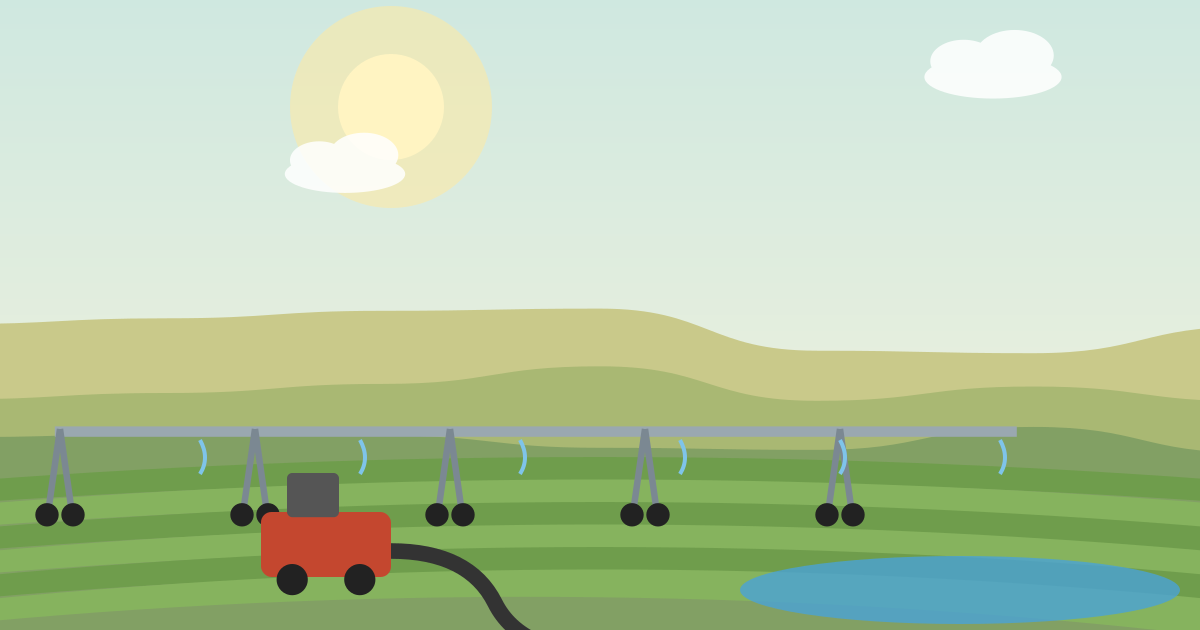
Linear move systems, also called lateral move, travel in a straight line across a field. They suit rectangular fields and irrigate every corner. They are less common than pivots and are usually installed by dealers, but seasonal rentals and leases can be arranged. This guide covers features, requirements and planning.
How linear systems work
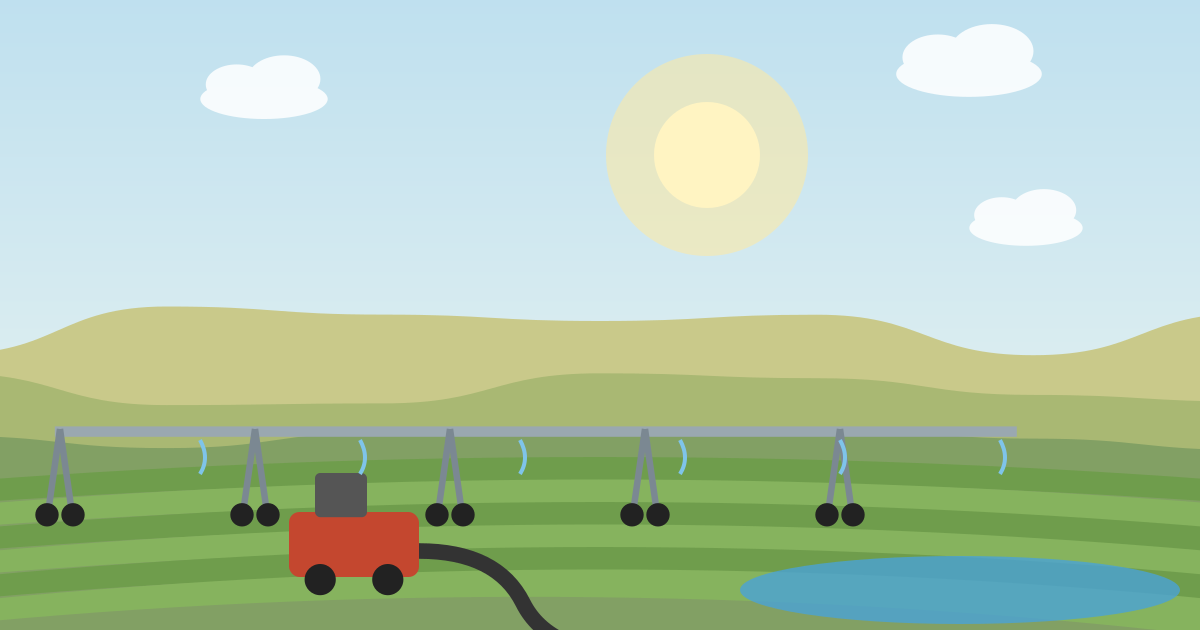
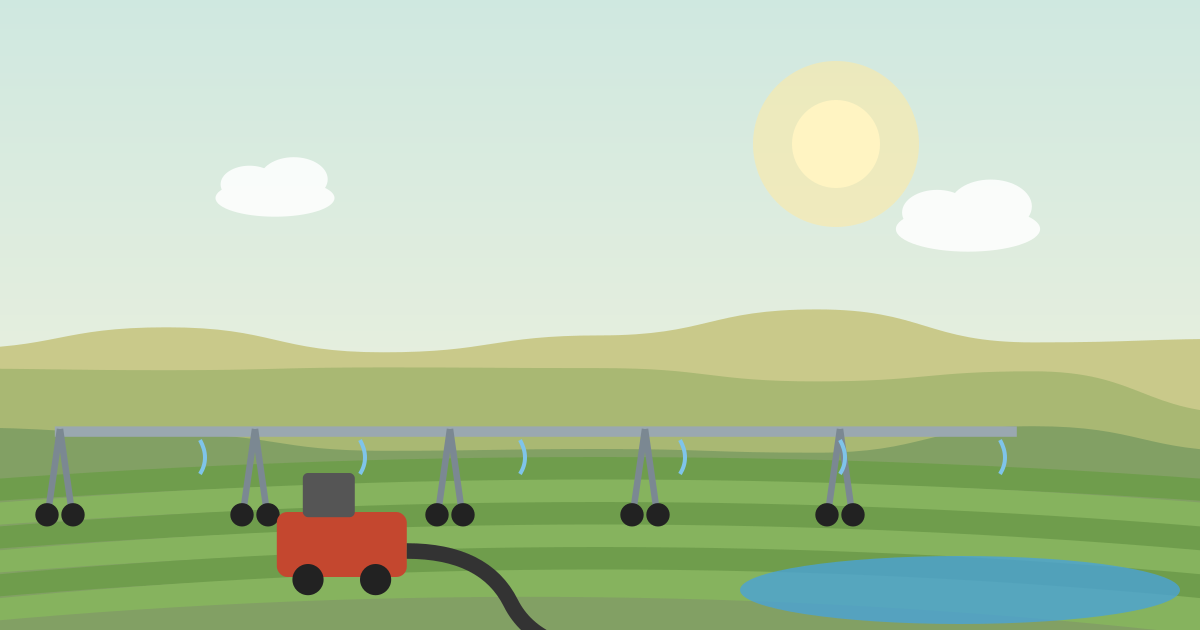
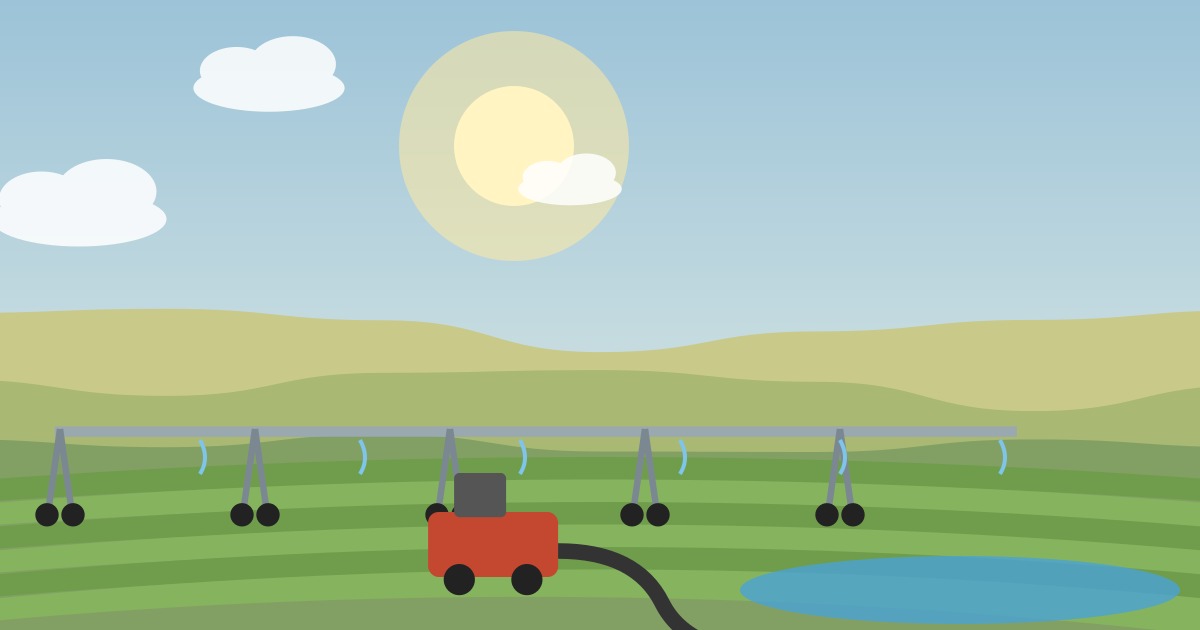
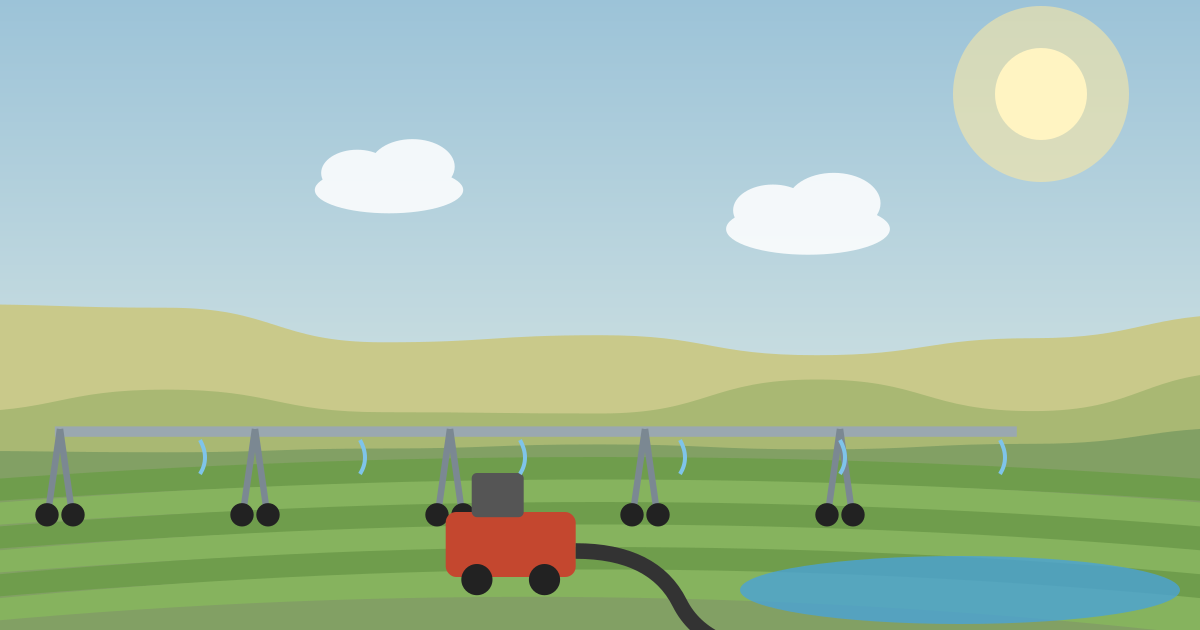
A pipeline on towers spans the field width, with towers driven by motors. The machine moves along a track or guide line from one end of the field to the other. Water is fed through a hose or from an open canal alongside. Some systems turn around at the end and move back.
Compare with center pivot irrigation rentals and renting a hose reel irrigator.
Why choose linear
- Fits rectangular fields.
- Covers corners.
- Efficient water use.
- Less labor than hand-moved pipe.
But it has trade-offs: higher setup complexity, hose or canal needs and guidance systems.
Water feed
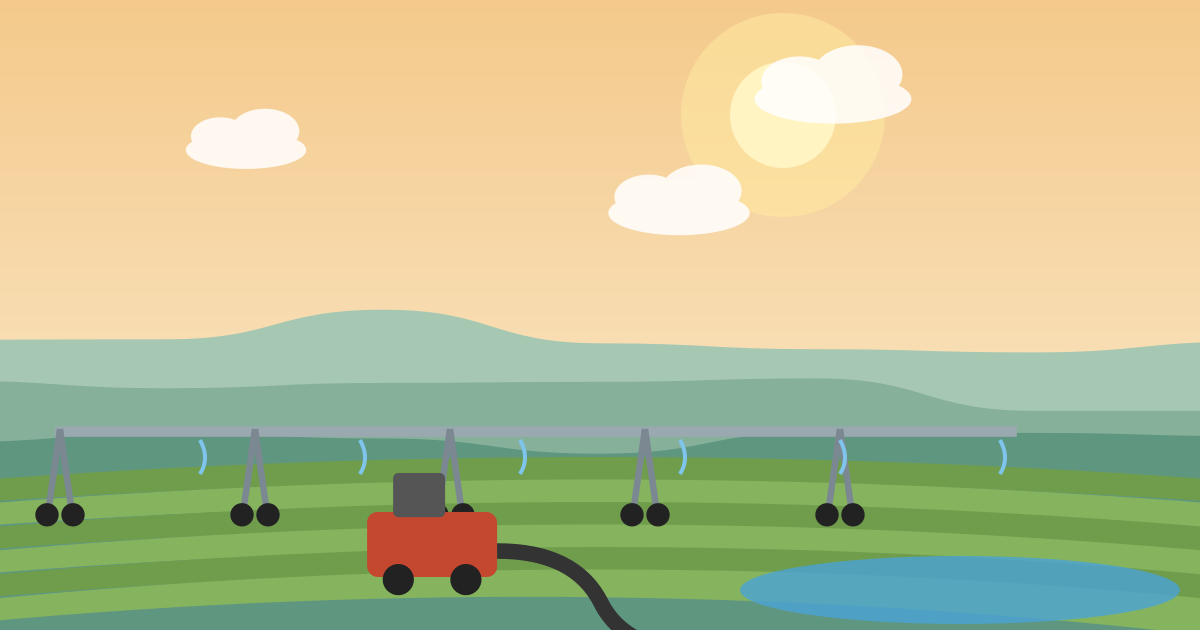
- Hose-fed. A flexible hose drags behind or alongside, supplying water from a hydrant.
- Canal-fed. A pump on the machine draws from an open ditch.
- Pipe feed. Hydrants spaced along the field.
Check which feed suits your site, flow and permissions. See SARE publications, the USDA NRCS and your state page.
Guidance
Machines follow a guide: a buried cable, a furrow, a laser or GPS. Check the system and its reliability. Slopes and soil conditions affect tracking. Make sure the track is clear of ruts, rocks and obstacles. Many farms mark a lane.
Nozzles and uniformity
Choose nozzles that fit flow and pressure. Uniform water distribution matters for yield. Check for wear, plugs and leaks. Adjust for field slope and wind.
Power and controls
Linear systems usually use electric motors, with power from the grid, generator or onboard engine. Controls manage speed and safety. Have an electrician check wiring and grounding. Use lightning protection where needed.
Setup and tear-down
Setup includes assembling spans, laying guidance, connecting water and power and testing. Experienced crews are important. Ask the dealer who does the work and what it costs. Plan storage space for off-season.
Common mistakes to avoid
- Weak water supply.
- Poor guidance setup.
- Mismatched nozzles.
- Rutted tracks.
- No setup crew.
Inspect before you accept
Check spans, towers, gearboxes, tires, nozzles, hoses, controls and wiring. Test run. Photograph existing damage. See understanding rental equipment condition reports.
Safety
- Lock out power before service. See the farm machinery lockout-tagout procedure template.
- Stay away from towers while running.
- Watch for power lines.
- Keep children and animals away.
- Follow electrical codes.
- Do not climb on spans in wind.
See the OSHA agricultural operations page and CDC NIOSH agriculture.
Transport
Long components need proper trailers. See DOT requirements for rented equipment transport and oversize load permits for rented equipment.
Costs and terms
Ask about seasonal rates, setup, service, deposit and damage terms. See how to budget for farm equipment rentals and understanding rental agreements.
Planning the season
Plan setup before planting. Test the system with water before the crop needs it. Schedule irrigation using soil moisture and weather data. Keep spare nozzles and tools. Plan teardown and storage.
Troubleshooting
If the machine veers, check guidance and ruts. If water is uneven, check nozzles and pressure. If towers stop, check power and alignment. If hose kinks, adjust routing. Contact the dealer when unsure.
Cleaning and return
Flush lines, drain water and clean. See returning farm equipment: cleaning and fuel rules.
A sample season
A vegetable grower with rectangular fields rents a hose-fed linear system for a season. The dealer sets up guidance, and the grower schedules irrigation with soil probes. At season end the dealer removes the system.
Questions to ask the dealer
- What span and field length does it fit?
- Hose or canal feed?
- What guidance system?
- Who handles setup and teardown?
- What service is included?
Wind, runoff and soil
Wind distorts spray patterns, and heavy application causes runoff. Adjust nozzles and speed to soil intake. On slopes, use lower application rates or other methods. Watch for ponding in tracks. Ask your NRCS office about irrigation water management.
Keeping records
Record dates, hours, water applied and issues. See record keeping for farm equipment rentals.
Layout and turnaround
Measure the field length and width, and plan where the machine starts and ends. Linear systems may need headlands or turnaround space, and some park at one end between irrigations. Check for fences, trees, poles, roads and ditches along the path. Leave room for service access, and mark the lane clearly so that tractors and sprayers avoid it.
Hose handling
Hose-fed machines drag a flexible hose that can snag on stakes, stumps and rocks. Keep the path clear, avoid sharp bends and check the hose for wear each week. Do not let vehicles drive over a pressurized hose. Store the hose coiled and out of sunlight when not in use.
Canal-fed systems and debris
A canal-fed machine needs clean water, a stable ditch and enough depth for the intake. Screens catch weeds and trash, so clear them regularly. Watch water levels and ditch banks. Check local water rights, and coordinate with neighbors who share the ditch.
Crop considerations
Tall crops can rub against spans and sprinklers, and young seedlings may need lighter applications. Plan nozzle heights and application rates for each stage of the crop. Keep records of irrigation timing and yield so you can judge whether renting was worth it for the next season.
Seasonal budget
Add electricity or fuel, labor for checks, nozzles, hose repairs, water fees and setup costs to the rental price. Compare the total with other irrigation options, including renting a center pivot or moving sprinklers by hand.
Bottom line
Linear systems irrigate rectangular fields well when water feed, guidance and setup are right. Plan the season and schedule with data.
Frequently asked questions
Linear or pivot?
Linear suits rectangular fields, and pivots suit circles.
How is water supplied?
By hose, canal or hydrants.
How does it steer?
By cable, furrow, laser or GPS guidance.
Who sets it up?
Usually the dealer or a trained crew.