
Boom sprayers are the workhorses of field-crop pest control. They apply herbicides, fungicides, insecticides and liquid fertilizer across wide swaths. Rentals range from trailed to self-propelled units. This guide covers matching, calibrating and operating a boom sprayer.
Boom basics
A boom carries nozzles at regular spacing. Boom height sets overlap between nozzle patterns. Boom width ranges from 40 to 120 feet or more. Wider booms cover more acres but need smoother fields and careful height control. Folding sections ease transport.
Compare with renting a sprayer for herbicide application and renting a section control kit for sprayers.
Sprayer types
- Three-point or pull-type sprayers. Use your tractor.
- Trailed sprayers. Larger tanks.
- Self-propelled sprayers. High clearance, high capacity.
- Skid-mounted sprayers. Truck or UTV mounted.
Ask about boom width, tank size and height range. See SARE publications, USDA NRCS and your state page.
Nozzle spacing and height
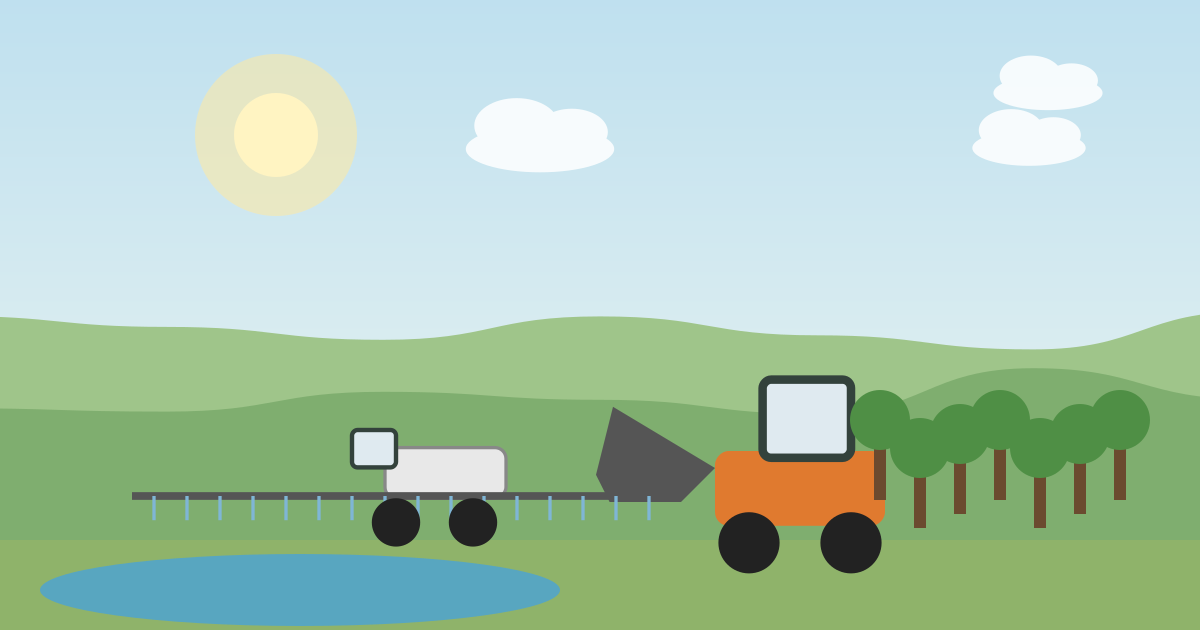
Nozzle spacing, spray angle and boom height determine overlap. Many systems use 20- or 30-inch spacing with a recommended height. Wrong height creates stripes. Keep the boom level with the crop. Use boom stabilizers or height control on rough ground.
Rate control and GPS
Rate controllers keep gallons per acre steady as speed changes. They use flow meters and speed sensors. GPS provides speed and positioning. See renting a gps guidance system for field work. Section control prevents overlap. Check controller compatibility and calibration.
Calibration
Test with water. Catch nozzle output for a minute, compare across the boom, and replace nozzles that deviate more than a few percent. Verify speed sensor and flow meter calibration. Record target rates and pressure. Recalibrate when changing nozzles or products.
Drift management
Use nozzles that match label droplet size. Lower boom height, moderate pressure and avoid high wind and inversions. Use drift-reduction nozzles when the label requires them. Keep buffers near sensitive areas. Check the EPA pesticides page.
Mixing and tank cleanout
Follow the label mixing order and compatibility notes. Agitate continuously. Clean out thoroughly between products, using label-approved cleaners. Flush booms and nozzles. Rinse the outside of the sprayer. Dispose of rinse water per label.
Common mistakes to avoid
- Wrong boom height.
- Worn nozzles.
- No calibration.
- Spraying in wind.
- Poor cleanout.
Inspect before you accept
Check the boom, hoses, pump, nozzles, valves, controller and sensors. Look for leaks. Test with water. Photograph existing damage. See understanding rental equipment condition reports.
Safety
- Relieve pressure before service.
- Lock out before work. See the farm machinery lockout-tagout procedure template.
- Keep clear of folding booms.
- Watch for power lines when unfolding.
- Wear protective gear as the label requires.
- Use ROPS and seatbelts on tractors.
See the OSHA agricultural operations page and CDC NIOSH agriculture.
Transport
Booms are wide. See the equipment transport tie-down checklist, DOT requirements for rented equipment transport and oversize load permits for rented equipment.
Costs and terms
Ask about daily and weekly rates, cleaning fees, delivery and deposit. See how to budget for farm equipment rentals and understanding rental agreements.
Planning the season
Plan spray windows by crop stage and weather. Book early because sprayers are in demand in spring. Keep spare nozzles, screens and O-rings. Train operators. Keep records.
Troubleshooting
If spray stripes appear, check height, nozzles and overlap. If rate wanders, check sensors and controller. If screens clog, clean them. If the boom bounces, slow down or adjust dampers. Contact the dealer when unsure.
Field speed and ride
Speed affects drift and coverage. Faster speeds can cause boom bounce and finer droplets drift. Pick a speed the field and boom can handle. Check terrain, and use suspension if available.
Cleaning and return
Triple-rinse, flush lines, clean screens and wash the exterior. Tell the dealer what products were used. See returning farm equipment: cleaning and fuel rules.
A sample job
A grower rents a trailed boom sprayer for post-emergence herbicide on soybeans. After calibration and a wind check, the grower sprays in the morning and cleans out thoroughly. The dealer inspects and accepts the return.
Questions to ask the dealer
- What boom width and tank size?
- Does it have rate control?
- What nozzles are installed?
- What cleanout is required?
- What damage terms apply?
Insurance and liability
Ask about coverage for crop injury, drift and equipment. Keep records and communicate with neighbors.
Keeping records
Record products, rates, dates, weather and fields. See record keeping for farm equipment rentals.
Matching width to field size
Wide booms are efficient in big, flat fields but awkward on small or hilly ones. Odd shapes, waterways and point rows cause overlaps and skips. For small fields, a narrower boom or a three-point unit may be easier to handle. Consider the time to fold and unfold, and the room to turn around.
Spray volume and carrier rates
Labels list gallons per acre. Lower volumes reduce refills but can affect coverage, especially in dense canopies. Fungicides often need higher volume and finer droplets, and herbicides often need coarser droplets. Choose nozzle size and speed to hit the label rate and droplet class.
Water and refill logistics
Large tanks run out quickly. Plan water sources, nurse tanks and refill spots near the field. Avoid filling next to wells or streams, and use backflow protection on any hose connected to a water supply. Keep a clean-water tank for emergency rinsing.
Crop stage and clearance
Tall crops need high-clearance machines or dropped nozzles. Tractor tires and boom frames can damage crops if clearance is too low. Check the crop stage and label limits on application timing, since some products must go on before certain growth stages.
Tank mixes and jar tests
Many sprays combine products. Mix in the order on the label, and do a jar test first if you are unsure about compatibility. Poor mixes can clog nozzles and reduce results.
Bottom line
Boom sprayers deliver uniform coverage when height, nozzles and calibration are right. Respect labels and clean thoroughly.
Frequently asked questions
What boom height is correct?
Follow the nozzle maker's recommendation for your spacing and angle.
How often should I calibrate?
When changing nozzles, speed or product.
Can I spray in wind?
Only within label limits.
How do I prevent stripes?
Check boom height, nozzle wear and overlap.